By the EGY Herb Export team. Updated October 2026.
Short answer: there is no single best origin for dried hibiscus. Sudan is the one trade sources most often call the benchmark for color and tartness. Nigeria is known for a very tart product. Egypt ships quickly to the Mediterranean, the Gulf and Europe and offers whole, cut and powder grades. Quality moves from season to season in every country, so the only reliable way to choose is to test samples side by side and read the certificate for each lot.
| Origin | How trade sources usually describe it | Worth checking |
|---|---|---|
| Sudan | Large calyces, deep red, strong tartness. Often treated as the reference | Availability and price swing with the season and logistics |
| Nigeria | Major producer, known for intense tartness | Cleanliness and consistency between lots |
| Egypt | Deep crimson color, whole, cut and powder grades, short route to Europe and the Gulf | Harvest is August to October, so ask for the crop year |
| Mexico, China, Thailand | Smaller suppliers, Mexico linked to jamaica drinks | Weather has moved world prices sharply in the past |
What do buyers look at in dried hibiscus?
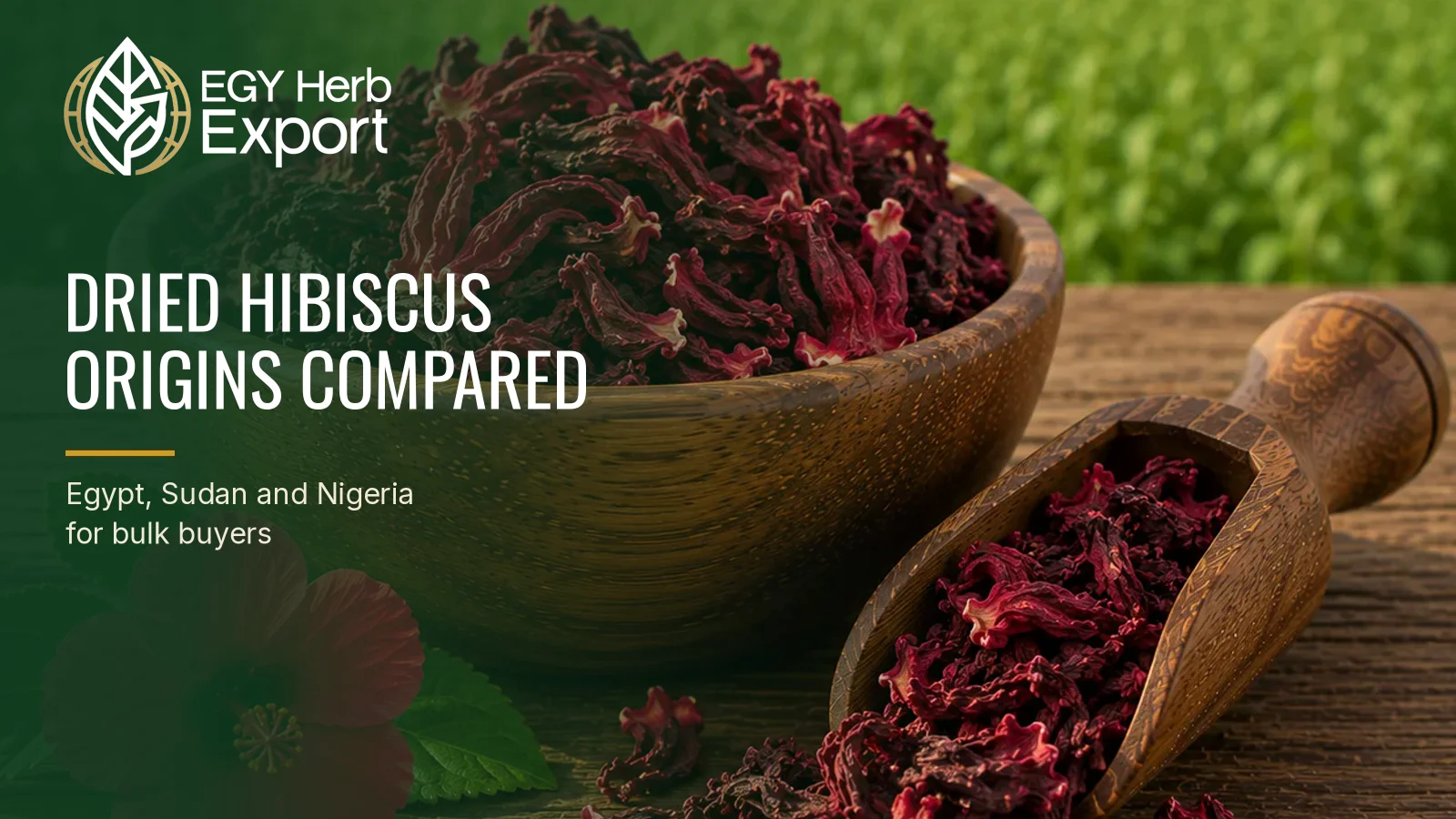
- Color. Deep crimson to dark red is what you want. The color comes from anthocyanins. Pale, brownish or patchy calyces usually mean old stock or poor drying.
- Calyx size and form. Whole calyces suit premium loose tea. Cut and sifted hibiscus, around 3 to 5 mm, is the standard for tea bags and blends. Powder goes into beverage mixes, extracts and natural colorants.
- Taste. Hibiscus should be tart, like cranberry. Brew it, don't guess.
- Cleanliness. Stems, seeds and dust count as foreign matter. A limit of about 1% is common.
- Moisture. Around 12% maximum. Wetter lots can mold or lose color in transit.
Which form should I buy for my product?
- Premium loose tea: whole calyces, strong color, very little foreign matter.
- Tea bags and blends: cut and sifted, with a stated particle size and low dust.
- Ready-to-drink and extracts: color and anthocyanin content matter more than how the calyces look.
- Natural colorant: powder with a defined color intensity and microbiological limits.
How do I test hibiscus samples fairly?
- Ask each supplier for a sample in the form you plan to buy.
- Compare them dry. Look at color depth, calyx size and how clean they are.
- Brew every sample the same way: same weight, same water temperature, same time. Compare the color of the infusion and the taste side by side.
- Read the certificate for the lot behind each sample: moisture, foreign matter, microbiology and pesticide results.
- Compare landed cost, including freight and transit time.