By the EGY Herb Export team. Updated October 2026.
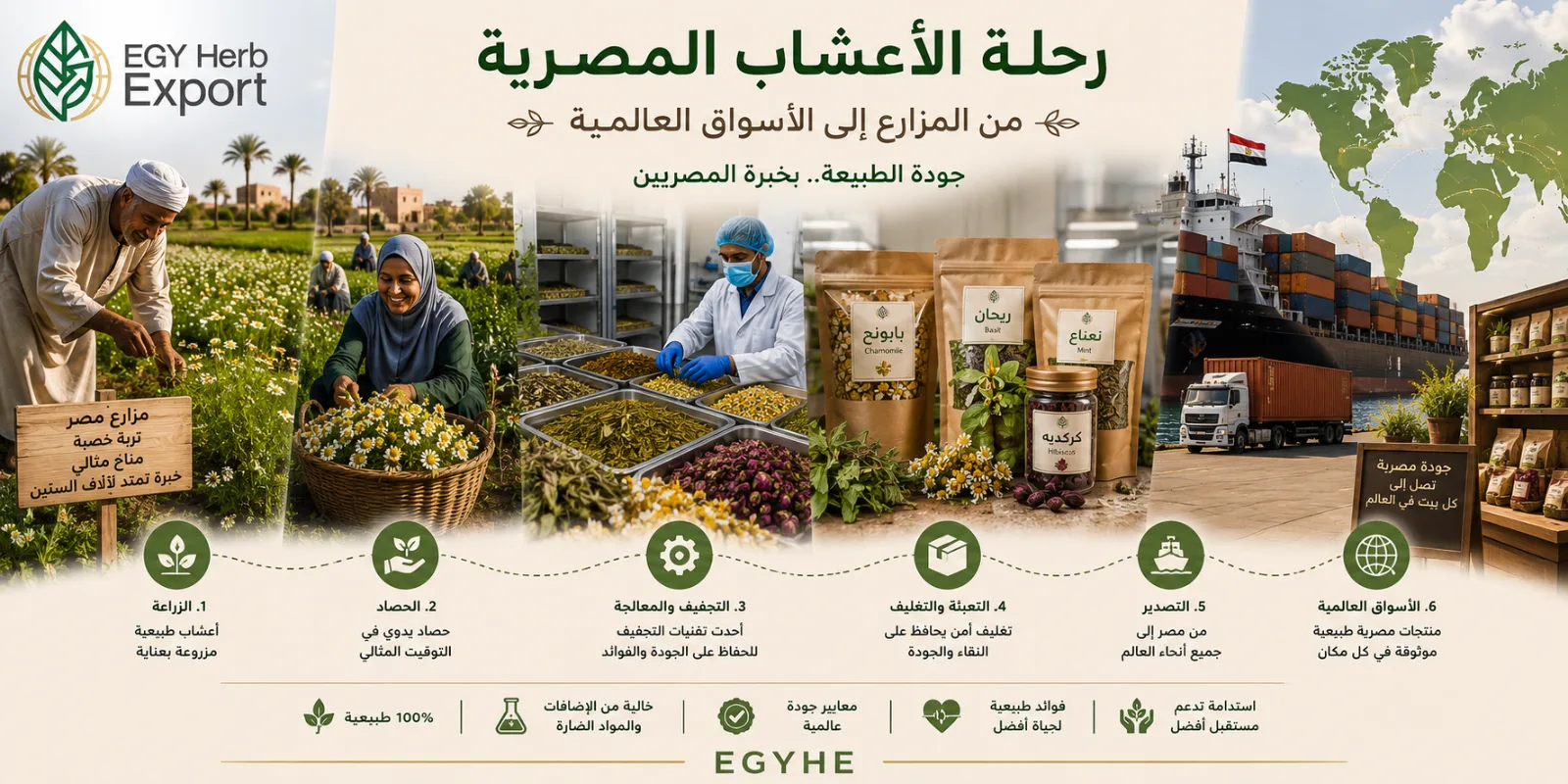
Short answer: Egyptian herbs go through six stages between the field and the container: growing, harvesting, drying, cleaning and grading, testing, and packing and loading. Each stage affects what ends up in your bag, so it helps to know what to ask at each one.
| Stage | What happens | What to ask the supplier |
|---|
| 1. Growing | Crops are grown in regions suited to each herb | Which farms and governorates? |
| 2. Harvest | Cut or picked at the right stage | Harvest stage and crop year |
| 3. Drying | Dried to a target moisture | Maximum moisture, drying method |
| 4. Cleaning and grading | Impurities removed, product graded | Grade, cut size, impurity limit |
| 5. Testing | Lab analysis and documents | COA for your lot, residue report |
| 6. Packing and loading | Packed, palletized, shipped | Packing, container weight, lead time |
Where are herbs grown, and who grows them?
Most Egyptian herbs and seeds come from Fayoum, Beni Suef and Minya. Different crops suit different places, and good suppliers contract with named farms in the right region instead of buying from the open market. Mint and basil can be cut several times a year, while chamomile, hibiscus and the seeds are seasonal crops. Many farms have moved from flood irrigation to drip irrigation, which gives better control over water and inputs and is relevant for pesticide residue limits.
When are herbs harvested?
Timing decides quality. Cut too early and a herb has less essential oil. Cut too late and flowers deteriorate and moisture rises.
- Chamomile is picked at full open, from February to May. Hand picking helps keep flower heads intact.
- Hibiscus is harvested when the calyx is fully developed, from August to October. Picking early gives paler color.
- Mint and basil are cut before flowering, when aroma is strongest.
How are herbs dried?
Dry, sunny weather makes drying one of Egypt's practical advantages. Herbs are spread out and turned so they lose moisture evenly. The target is usually below 12% moisture, and chamomile for some pharmaceutical buyers is specified at 10% or less. Wet product risks mold and loss of color during shipping, so moisture is one of the first numbers on a certificate of analysis.
How is the product cleaned and graded?
After drying, the product is cleaned and sorted. Typical steps are air separation to remove dust and light impurities, screening by size, color sorting for discolored pieces and hand sorting for premium grades. The result is a graded product such as whole flowers, broken grade or powder. Each grade has its own price and use, as we explain in our guide to
chamomile grades.
What testing and documents do I get?
A certificate of analysis normally covers moisture, essential oil where it applies, impurities and microbiology. Buyers shipping to the EU should also ask for a pesticide residue panel against EU maximum residue levels. Gulf buyers usually ask for halal documentation and a certificate of origin, and buyers who need organic or other certificates should say so at the quote stage. Lab testing takes time, so build it into your schedule, particularly for a first shipment from a new supplier.
How are herbs packed and shipped?
Dried herbs and seeds are normally packed in bags or sacks of about 25 kg, palletized and loaded into containers. We quote FOB Cairo, which means we deliver the goods on board at the Egyptian port and you arrange the freight. Transit time depends on the port and route, so ask your forwarder for a current estimate. Our
import guide covers shipping terms and documents in detail.
How we work
EGY Herb Export sources directly from farms in Fayoum, Beni Suef and Minya and manages the process through to shipment. The minimum order is 500 kg per product, every shipment has a certificate of analysis, and qualified buyers can ask for a free sample first.
Request a quote, read the
buyer FAQ, or browse the
product list.