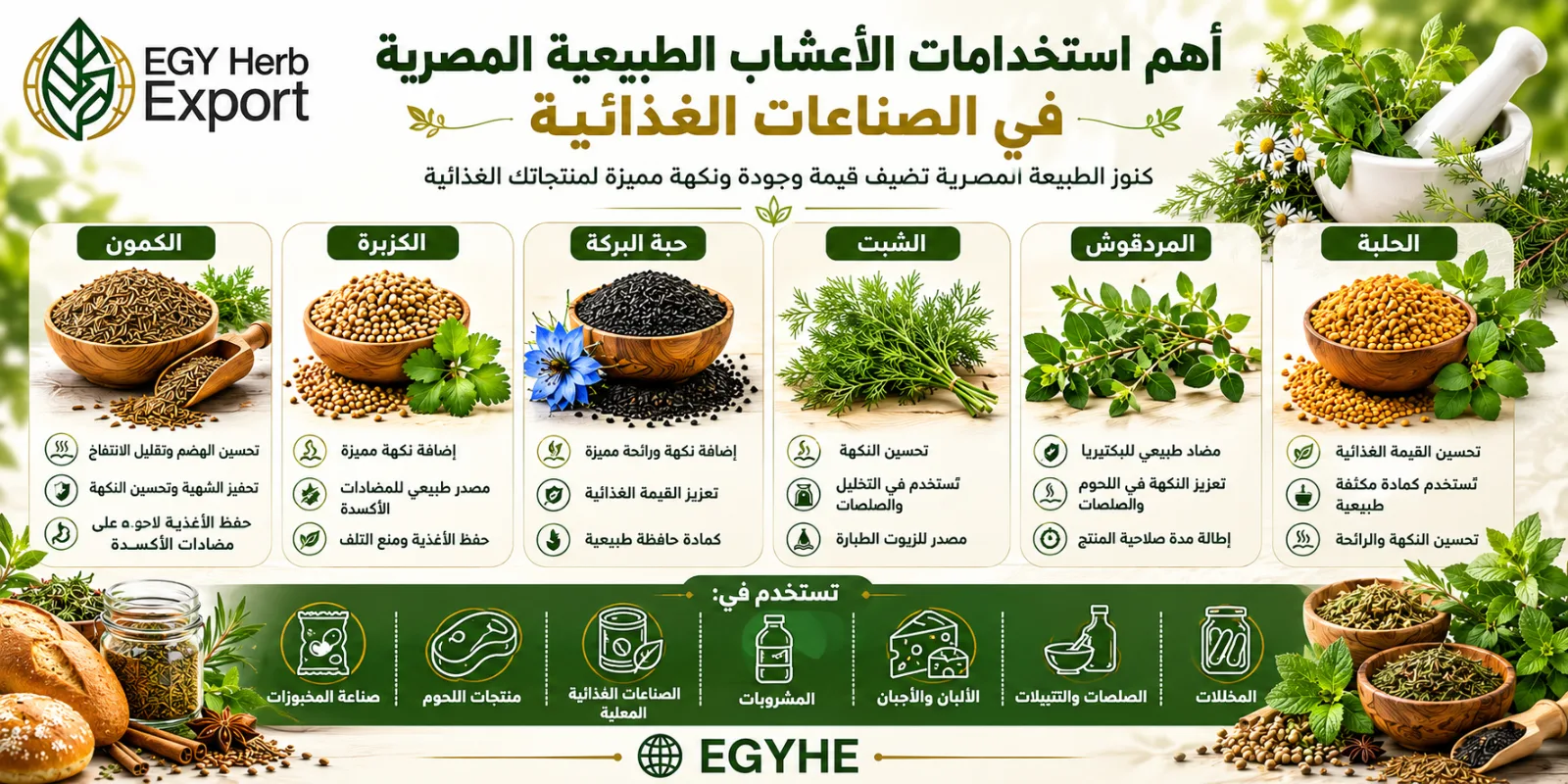
How Food Manufacturers Actually Buy Egyptian Herbs

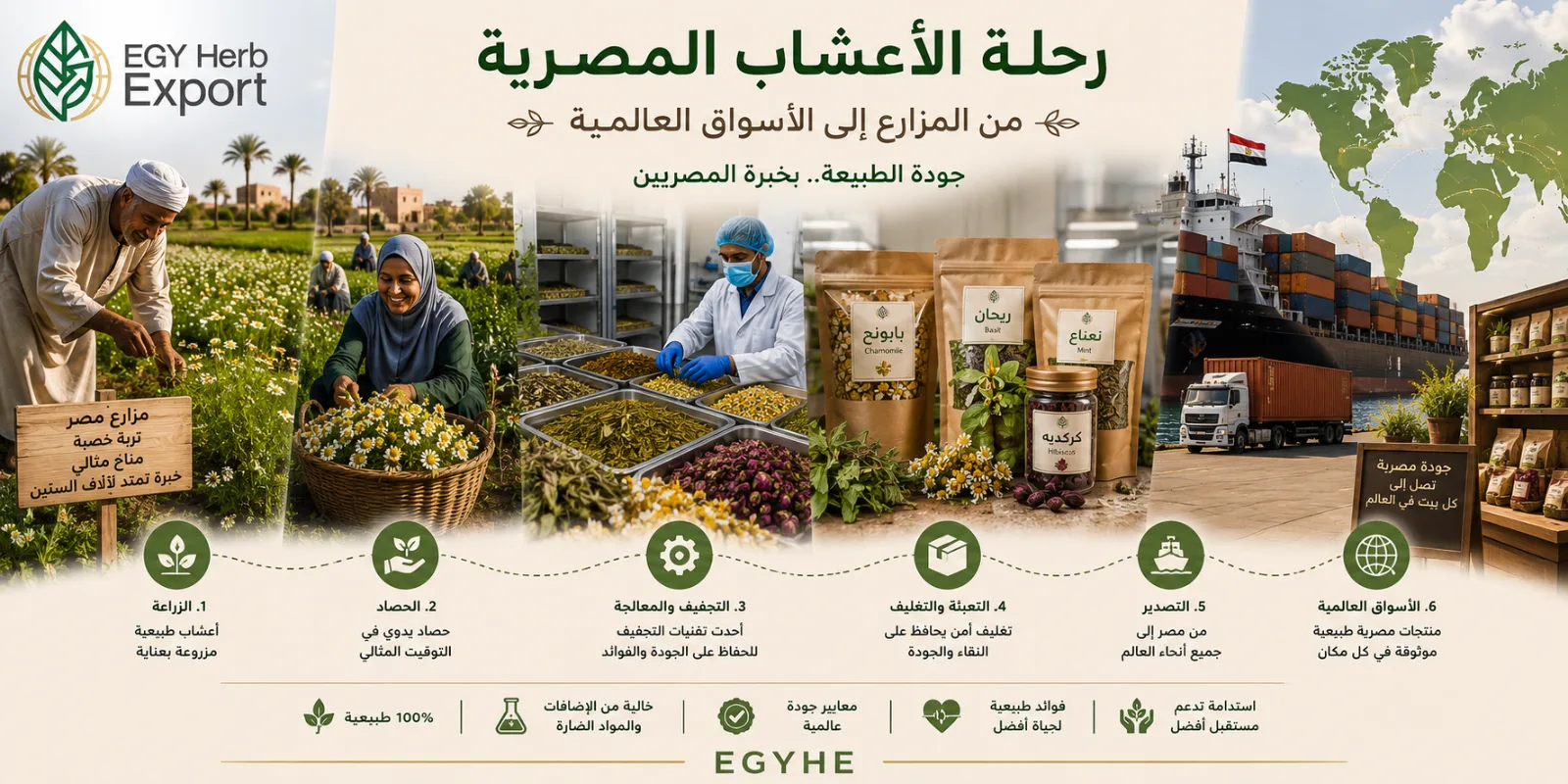
The global food industry is the largest single buyer of Egyptian herbs. Herbal tea manufacturers, beverage companies, spice blenders, bakery ingredient suppliers, and functional food producers collectively import the majority of Egypt's herb export volume every year.

But food manufacturers do not buy herbs the way retail consumers do. They buy to specification β€” with defined parameters for moisture, particle size, microbial counts, pesticide residue, and sensory profile. Understanding these specifications helps explain why Egyptian herbs have become the preferred source for many industrial buyers and what suppliers need to provide to enter this market segment.

Egyptian Chamomile in the Food and Beverage Industry

Chamomile is Egypt's most commercially important herb export and the product with the widest range of food industry applications.

In herbal tea production, chamomile is used as both a primary ingredient in single-herb products and as a functional component in blend teas targeting relaxation, sleep, and digestive health. The European herbal tea market alone was valued at over 2 billion euros, with chamomile consistently ranking among the top three ingredients by volume.

Food manufacturers buying chamomile for tea specify flower grade (whole flower versus broken), moisture content (typically below 10% for tea-grade), essential oil percentage, and absence of sulfur treatment. Sulfur is sometimes used to preserve color in lower-grade product β€” EU buyers test for it and reject treated material.

In pharmaceutical food applications, chamomile extract is used in digestive health products, where the active compound apigenin must meet minimum concentration thresholds. This requires chamomile with consistently high essential oil content β€” a specification Egyptian Fayoum-origin chamomile meets reliably.

Chamomile harvest in Egypt runs February to May. Buyers placing orders for the following season should engage suppliers in January to secure allocation from premium growing regions.

Egyptian Hibiscus in the Beverage Industry

Hibiscus has experienced the fastest demand growth of any Egyptian herb export over the past five years, driven by the functional beverage industry's interest in hibiscus anthocyanins as both a natural colorant and an ingredient with documented health claims.

In 2024, Egypt exported over 22,000 metric tons of dried hibiscus β€” with the functional beverage sector accounting for a growing share of this volume.

Food manufacturers use hibiscus in three primary formats. Whole dried calyces for premium tea blends and visual-appeal products where the flower form is part of the presentation. Cut and sifted grades for standard tea blending and extract production. Hibiscus powder or extract for beverage concentrates, functional drinks, and food coloring applications where E-number alternatives are required.

The key specification for beverage-grade hibiscus is anthocyanin content, which determines color intensity and functional claim strength. Egyptian hibiscus from Aswan and Qena produces some of the highest anthocyanin concentrations available globally, due to the extreme UV exposure in these regions. Buyers should request anthocyanin content data alongside standard COA parameters.

Egyptian Mint in Food Manufacturing

Egyptian peppermint and spearmint supply three distinct food industry segments, each with different quality requirements.

Confectionery and chewing gum manufacturing requires mint with high menthol content and consistent particle size. Egyptian peppermint essential oil, with menthol concentrations typically running 40 to 55%, is suitable for direct use in confectionery flavoring applications.

Beverage and ready-to-drink tea applications use dried mint as a flavoring ingredient. Moisture below 12% and low microbial counts are the critical specifications. Nile Delta mint farms producing multiple harvests per year provide supply consistency that seasonal single-harvest origins cannot match.

Food flavoring extract production uses Egyptian mint as a raw material for menthol extraction. The economics favor high-menthol-content material, which commands a price premium over lower-concentration alternatives from competing origins.

Egyptian Cumin, Coriander, and Spice Seeds

Egyptian cumin is valued in the food industry for its essential oil concentration and the intensity of its cuminaldehyde content β€” the compound primarily responsible for cumin aroma in finished products.

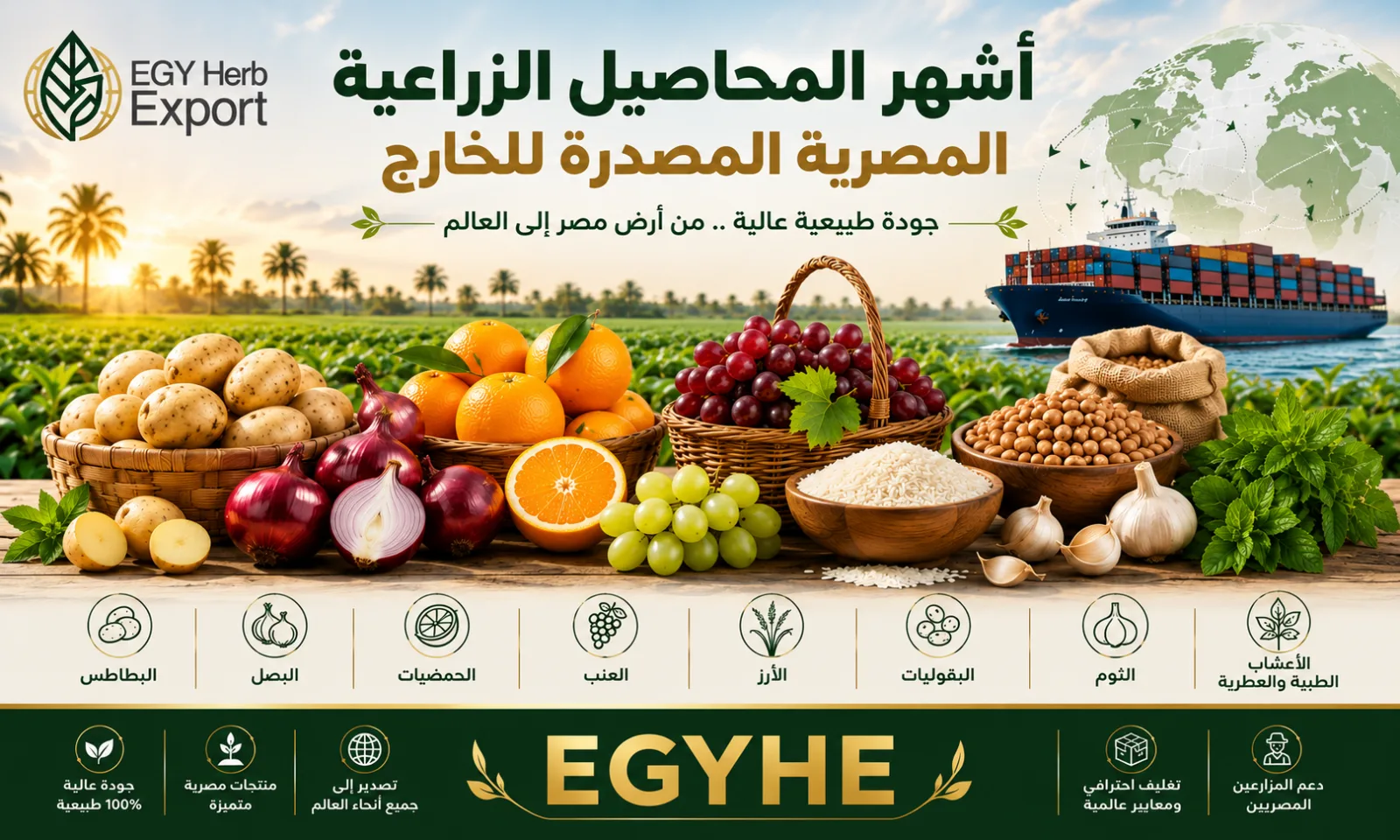
Food manufacturers using cumin in spice blends, ready meals, and seasoning applications buy to aroma strength specifications that Egyptian cumin consistently meets at competitive price points. Egypt ranks among the top global exporters of cumin and coriander, with established supply chains to European and Gulf food manufacturers.

Coriander from Egypt is used in spice blending, meat processing seasonings, and baked goods. Buyers specify whole seed versus ground, moisture content, and volatile oil content. Egyptian coriander, grown primarily in Upper Egypt, is known for consistent sizing and low foreign matter content.

Egyptian Basil and Specialty Herbs in Food Applications

Egyptian basil supplies the food industry in two distinct streams. Culinary basil β€” dried whole or cut β€” goes into Italian food manufacturing, Mediterranean seasoning blends, and herb-infused oil production. Essential oil basil β€” varieties selected for high linalool or estragole content β€” goes into flavor house applications for the broader food and beverage industry.

Egypt ranks first globally in basil exports. The multiple-harvest cycle available in Beni Suef and Minya gives Egyptian basil a supply consistency advantage that European single-season origins cannot provide.

Dill, fenugreek, and anise from Egypt complete the portfolio of herbs used across food manufacturing. Dill is used in pickling, seafood processing, and Eastern European food manufacturing. Fenugreek goes into curry blends, health food products, and functional food applications. Anise is used in confectionery, liqueur production, and traditional food manufacturing across Middle Eastern and European markets.

Sourcing Egyptian Herbs for Food Manufacturing

Food manufacturers evaluating Egyptian herb suppliers should request the following documentation as a baseline before placing any order: full COA from an ISO-accredited laboratory, multi-residue pesticide panel against EU MRL standards, phytosanitary certificate from Egyptian authorities, certificate of origin, and microbial count results.

For organic-certified product, farm-level certification documentation should be requested separately from product certification.

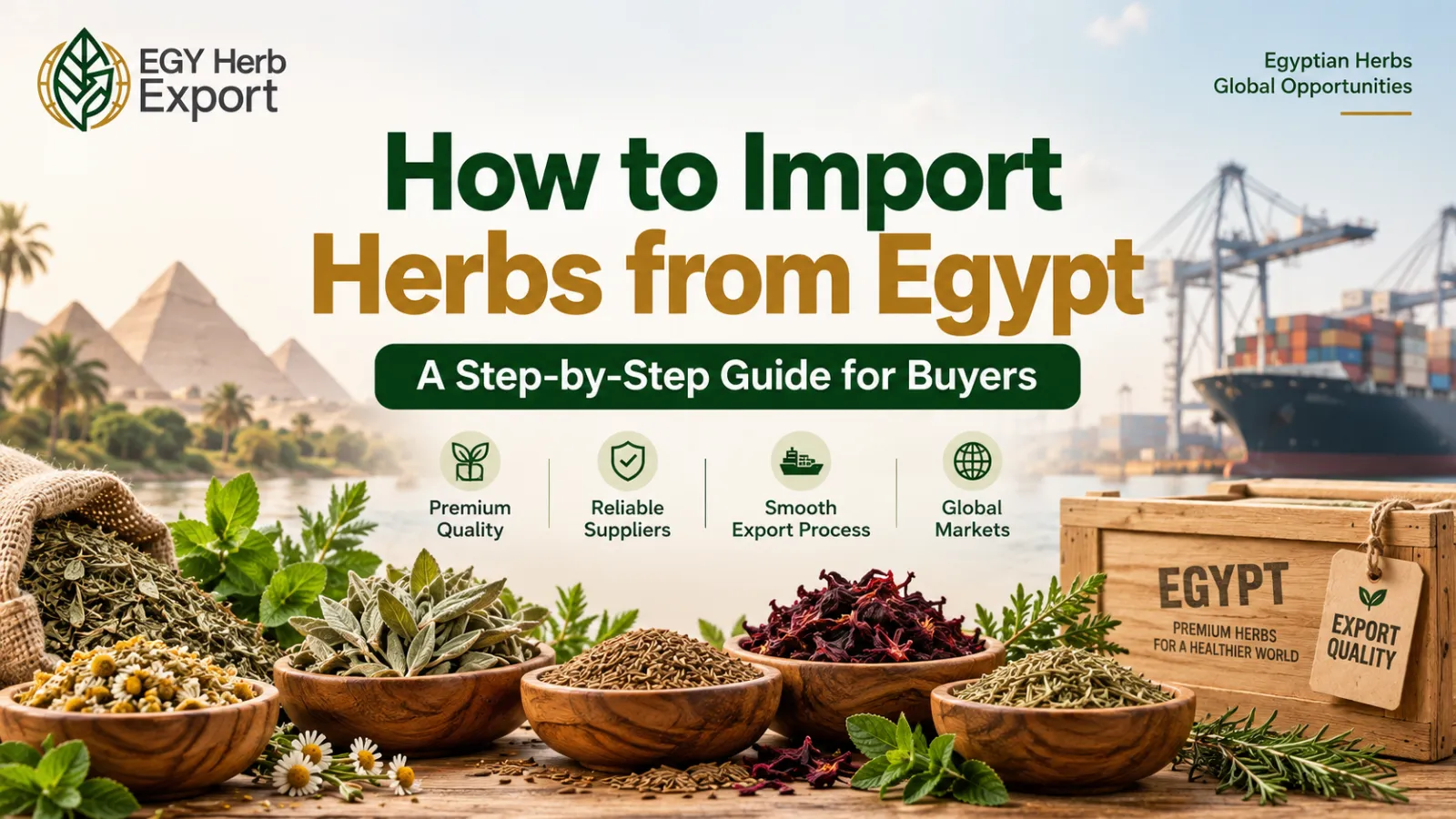
EGY Herb Export supplies food-grade Egyptian herbs directly from farms in Fayoum, Beni Suef, and Minya, with full documentation for every shipment. Minimum order 500kg, FOB Cairo. Samples available before bulk orders.

Request a quote or download our product catalog for current specifications and pricing.