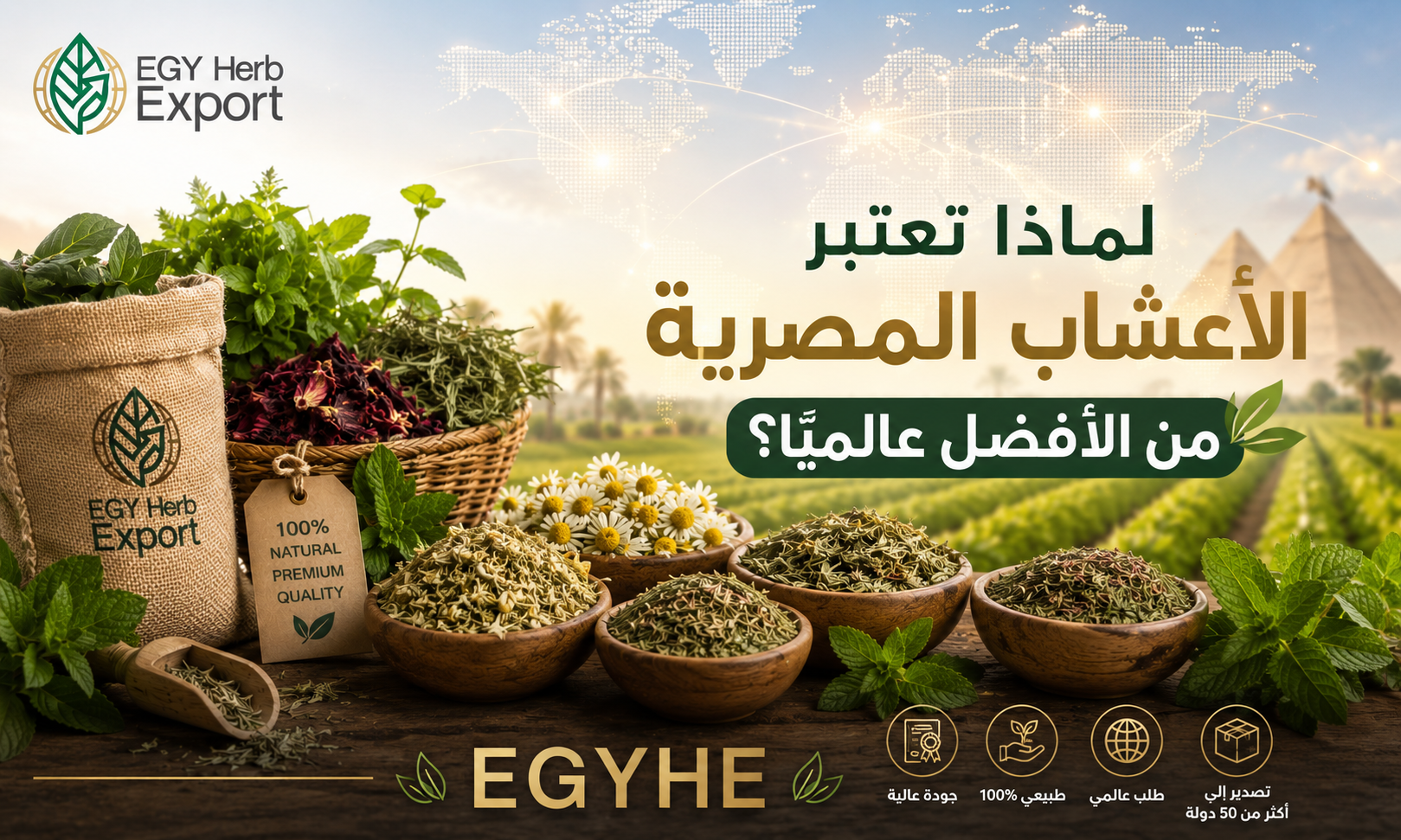
The Answer Is Not Marketing — It Is Geography and Chemistry
When international buyers describe Egyptian chamomile as the benchmark or Egyptian hibiscus as producing the deepest red grades available, they are not being polite. They are describing measurable differences in essential oil concentration, anthocyanin levels, and aroma profiles that show up in lab tests.
The question worth answering is: why does Egypt specifically produce these results? The answer comes down to three factors that no other country can fully replicate — soil composition, climate conditions, and agricultural continuity.
The Nile Valley Soil
Egypt's cultivated land sits on silt deposits carried down from the Ethiopian Highlands through the Blue Nile and Atbarah rivers over thousands of years. These deposits reach depths of over 10 meters in the northern delta and around 7 meters near Aswan — creating one of the most mineral-rich agricultural soils on earth.
The soil is characterized by high clay content combined with minerals from two distinct river systems. The Blue Nile brings sediment from the Ethiopian plateau, while the White Nile contributes important chemical constituents from Central Africa. This combination produces soil with a mineral diversity that directly affects how aromatic plants develop their essential oil profiles.
For herb buyers, this matters because essential oil concentration is directly linked to the mineral composition of soil. Plants grown in mineral-rich environments produce more complex and concentrated essential oils — which is exactly what pharmaceutical manufacturers, essential oil distilleries, and premium tea brands are testing for in their COA requirements.
Climate: Hot Days, Cool Nights, Low Humidity
Egypt's climate creates a specific stress condition in aromatic plants that actually improves their quality. The combination of long daily sun exposure (10 to 12 hours during growing seasons), low humidity throughout most of the cultivation period, and significant day-to-night temperature variation in Upper Egypt regions like Aswan and Fayoum pushes plants to produce more aromatic compounds as a natural response to environmental stress.
This thermal variation — hot days followed by cooler nights — is associated with higher essential oil yield in aromatic plants. The result is herbs with stronger aroma per gram, longer shelf life, and higher active compound concentrations than equivalents grown in humid, temperate climates. This is why European pharmaceutical buyers specifically request Egyptian-origin chamomile and mint when their formulations require a minimum essential oil percentage.
Regional Specialization
Egypt's herb-producing regions are not interchangeable. Each has developed specific advantages for particular crops.
Fayoum is Egypt's largest oasis, with deep alluvial soil and reliable irrigation from the Nile. It is the primary production zone for chamomile, hibiscus, and anise. The region's distance from coastal humidity produces particularly clean, dry flower grades.
Beni Suef and Minya form Upper Egypt's agricultural heartland, known for basil, mint, and fennel. The extended growing season in this region allows multiple harvests per year, giving exporters supply continuity that single-harvest regions cannot match.
Aswan and Qena offer the driest conditions in the herb-growing belt and produce hibiscus with the highest anthocyanin concentration — the pigment responsible for the deep red color that beverage manufacturers specifically test for. Egypt exported over 22,000 metric tons of hibiscus from these regions in 2024.
Agricultural Continuity
Egypt's herb cultivation is not a recent development responding to export demand. Archaeological evidence shows medicinal herb cultivation in the Nile Valley dating back thousands of years, with coriander, thyme, and aromatic plants found in historical records and excavation sites.
This continuity matters practically. Egyptian farmers in these regions have accumulated generational knowledge about planting cycles, harvest timing, and post-harvest handling specific to their microclimates. The result is a level of crop consistency that newer producing regions — even those with similar climates — take decades to develop.
For international buyers, this translates into predictable quality across shipments — something that genuinely differentiates established Egyptian suppliers from lower-cost alternatives.
What International Buyers Actually Test For
When a German herbal tea manufacturer or a US supplement brand evaluates Egyptian herbs, they are not buying on country of origin alone. They are testing essential oil percentage (Egyptian chamomile typically sits at the higher end of the 0.4 to 1.5% v/w range), moisture content below 12%, pesticide residue against EU MRL standards, microbial counts for food safety compliance, and color and anthocyanin content for hibiscus.
Egyptian herbs pass these tests consistently — and that consistency, more than any marketing claim, is why Germany, France, the Netherlands, Saudi Arabia, and the United States continue to be the primary importing markets year after year.
Working with EGY Herb Export
EGY Herb Export sources directly from farms in Fayoum, Beni Suef, and Minya. Every shipment comes with a Certificate of Analysis (COA), full export documentation, and FOB Cairo shipping. Minimum order starts at 500kg.
Want to verify quality before committing to a bulk order? Request a sample and quote or download our product catalog.