By the EGY Herb Export team. Updated October 2026.
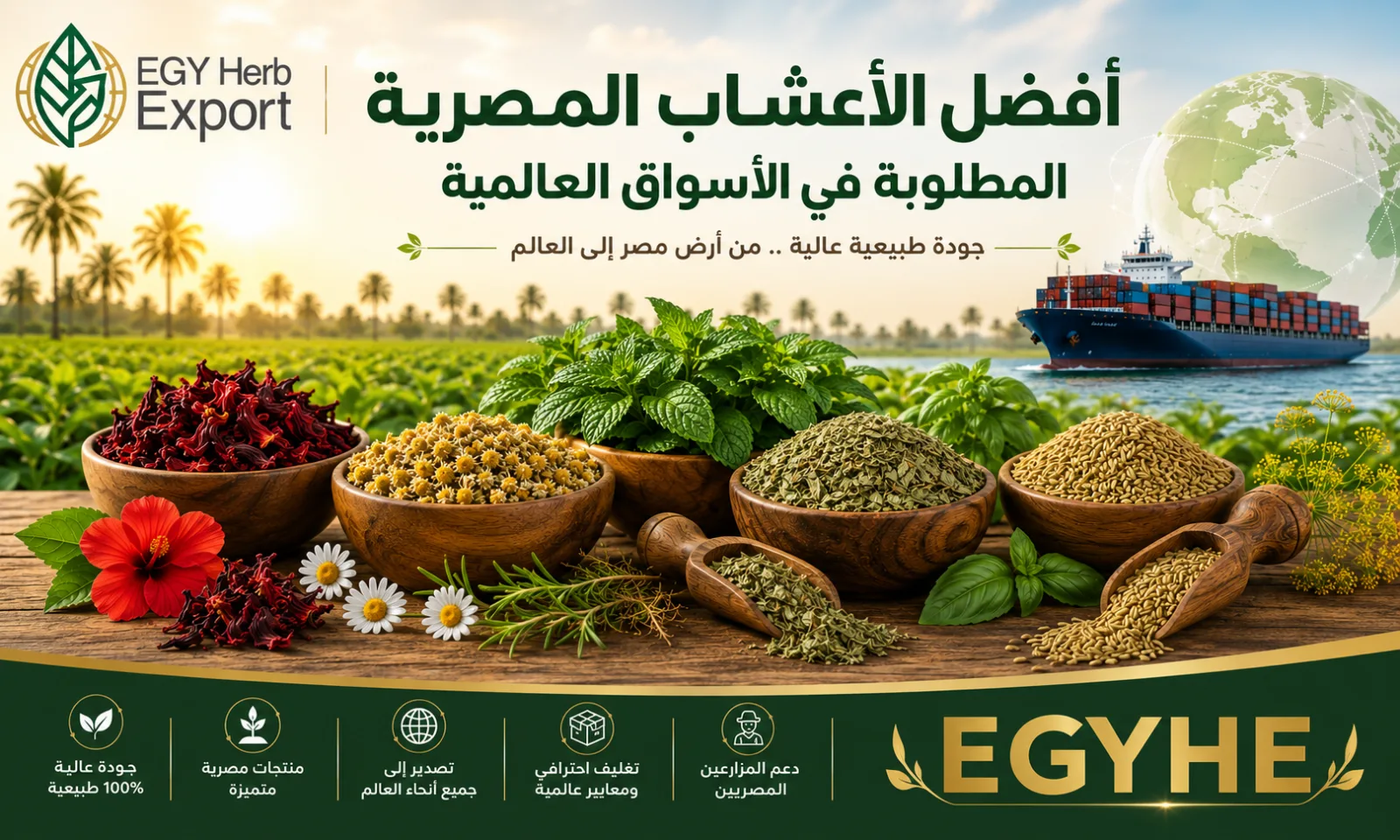
Short answer: the Egyptian products importers ask for most are hibiscus, chamomile, mint, basil and the seeds (cumin, fennel, anise and black seed). A Food Industries Chamber official has said Egypt ranks first in basil exports and second in marjoram, and that medicinal and aromatic plant exports reached about $330 million in 2023. Other studies give lower totals, so treat that as a rough guide. What matters when you buy is the harvest window and the specification, not the headline number.
| Product | What buyers use it for | Harvest in Egypt | What buyers specify |
|---|---|---|---|
| Hibiscus | Herbal tea, beverages, natural colorant | August to October | Color depth, whole or cut, moisture |
| Chamomile | Tea, pharmaceutical and herbal products | February to May | Whole flower share, essential oil, moisture |
| Mint | Tea, seasoning blends, food manufacturing | Several cuts a year | Color, aroma, leaf size |
| Basil | Seasoning blends, food manufacturing | Several cuts a year | Color, aroma, cut size |
| Cumin, fennel, anise, black seed | Spice blending, tea, natural health | Annual crop | Purity, essential oil, foreign matter |
Why do buyers choose Egyptian herbs?
- Climate. Fayoum, Beni Suef, Minya and the far south have hot, dry weather and long sunshine. That suits drying and tends to give herbs with good aroma and a long shelf life.
- Timing. Chamomile is harvested from February to May and hibiscus from August to October. If you place orders to match the harvest, you get fresher stock and more choice of grade.
- Several cuts a year. Crops like mint and basil can be cut more than once, so supply is steadier than from single-season origins.
- Distance. Cairo's ports are a short sail from the Mediterranean, the Gulf and Europe.
Which Egyptian herbs are in highest demand?
Chamomile
Chamomile is the herb many buyers come to Egypt for. It goes into herbal tea and pharmaceutical products. Buyers usually specify moisture, the share of whole flowers and essential oil, and they ask for a certificate of analysis. Our guide to chamomile grades explains the options.Hibiscus (karkade)
Hibiscus is bought for tea, beverages and as a natural red colorant, which is why color depth and anthocyanin content are what buyers check first. We compare the main origins in dried hibiscus origins.Mint and basil
Mint and basil supply seasoning makers, tea blenders and food manufacturers. According to the Food Industries Chamber official, Egypt is first in basil exports. Both crops are cut several times a year, which helps consistency.Cumin, fennel, anise and black seed
These seeds are core ingredients for spice packers, tea blends and the natural health sector in Europe and the Gulf. Seeds are bought on purity, essential oil and foreign matter. See how to compare Egyptian and Indian cumin.What do buyers in different markets ask for?
- Europe: pesticide residue testing against EU limits, a certificate of origin, and often organic or food-safety certificates for supplier approval.
- Gulf (Saudi Arabia, UAE): halal documentation, plus labeling and registration rules that each country's food authority sets. Many Gulf buyers prefer smaller first orders with quick turnaround.
- United States: importers have to verify their foreign suppliers under FDA rules, so expect detailed supplier questionnaires.