Egypt as a Global Agricultural Exporter

Egypt exported a record 8.6 million tons of agricultural products in 2024 β€” the highest volume in the country's history, according to the Ministry of Agriculture and Land Reclamation. The total value reached $10.7 billion, representing nearly one quarter of Egypt's total goods exports that year. The government has set a target of $12 billion for 2025.

Egypt now exports more than 400 agricultural commodities to 160 countries, after opening 95 new markets over the past decade. Agricultural exports have become the second-largest source of foreign currency income for the Egyptian economy, after tourism.

For international buyers, this scale means Egypt can supply consistent volumes with established export infrastructure β€” cold chains, certified packing facilities, and direct shipping routes to Europe, the Gulf, and beyond.

Sources: Ministry of Agriculture and Land Reclamation, USDA Foreign Agricultural Service Egypt Reports

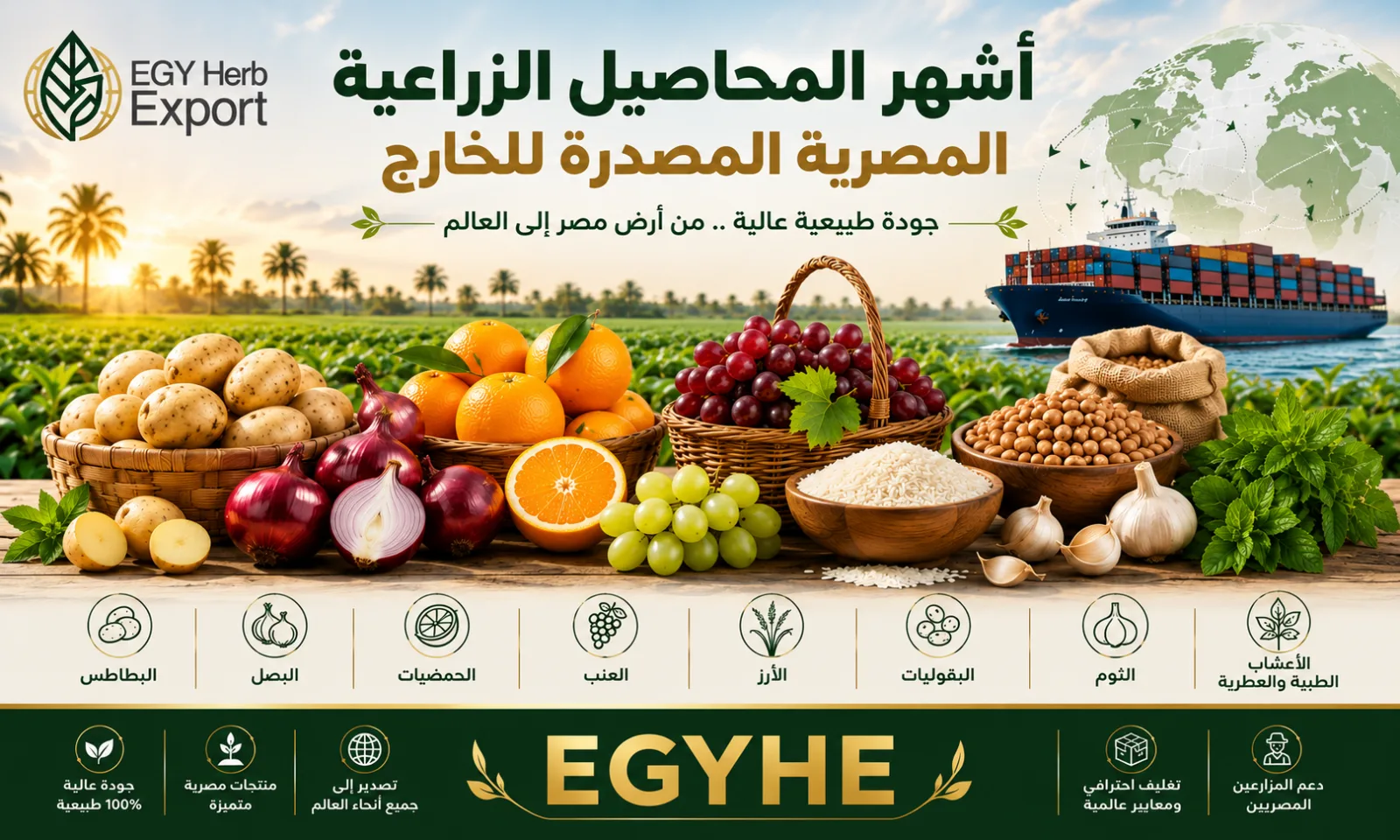
Top Egyptian Agricultural Crops Exported

Egyptian Citrus β€” the Leading Export

Citrus is Egypt's largest agricultural export by both volume and value. In 2024, Egypt exported over 2.28 million tons of citrus, with oranges accounting for the majority. Orange exports are predicted to reach 2 million metric tons in the current marketing year β€” a 25% increase from the year before, according to the USDA.

The main destination for Egyptian oranges is the Netherlands, which serves as the entry point to European distribution networks. Other major buyers include Saudi Arabia, the UK, and China. Egypt supplies European markets during their off-season, giving Egyptian exporters a natural timing advantage.

Egyptian Potatoes

Potatoes ranked second in Egypt's agricultural exports in 2024, with nearly 976,000 tons exported. Key markets include Russia, Germany, the UAE, and Saudi Arabia. Egyptian potatoes are valued for their size consistency, low moisture content, and suitability for industrial processing as well as fresh retail.

Egyptian Onions

Egypt exported around 288,000 tons of onions in 2024. Egyptian onions are known for their long shelf life β€” a practical advantage for importers managing long shipping routes β€” and their strong flavor profile, which makes them well suited for food manufacturing and restaurant supply.

Egyptian Grapes

Grape exports reached 180,000 tons in 2024 and are growing steadily. Egypt's grape harvest reaches European and Gulf markets during periods when local supply is limited, giving Egyptian exporters access to premium pricing windows.

Egyptian Garlic

Egyptian garlic is among the most aromatic varieties traded internationally, with high allicin content that makes it attractive for both food production and pharmaceutical applications. Export volumes reached 24,600 tons in 2024 with demand growing from European health product manufacturers.

Egyptian Herbs and Medicinal Plants

Herbs are the fastest-growing category within Egypt's agricultural exports and the segment with the highest value per kilogram. Egypt holds the global number one position in basil exports, ranks second in jasmine and marjoram, and exported over 22,000 metric tons of hibiscus in 2024 alone.

Unlike bulk vegetables, herbs carry significant price premiums for quality β€” organic certification, specific essential oil percentages, and pesticide compliance all affect the price a buyer is willing to pay. This makes herbs one of the most commercially interesting export categories for buyers looking to work directly with Egyptian suppliers.

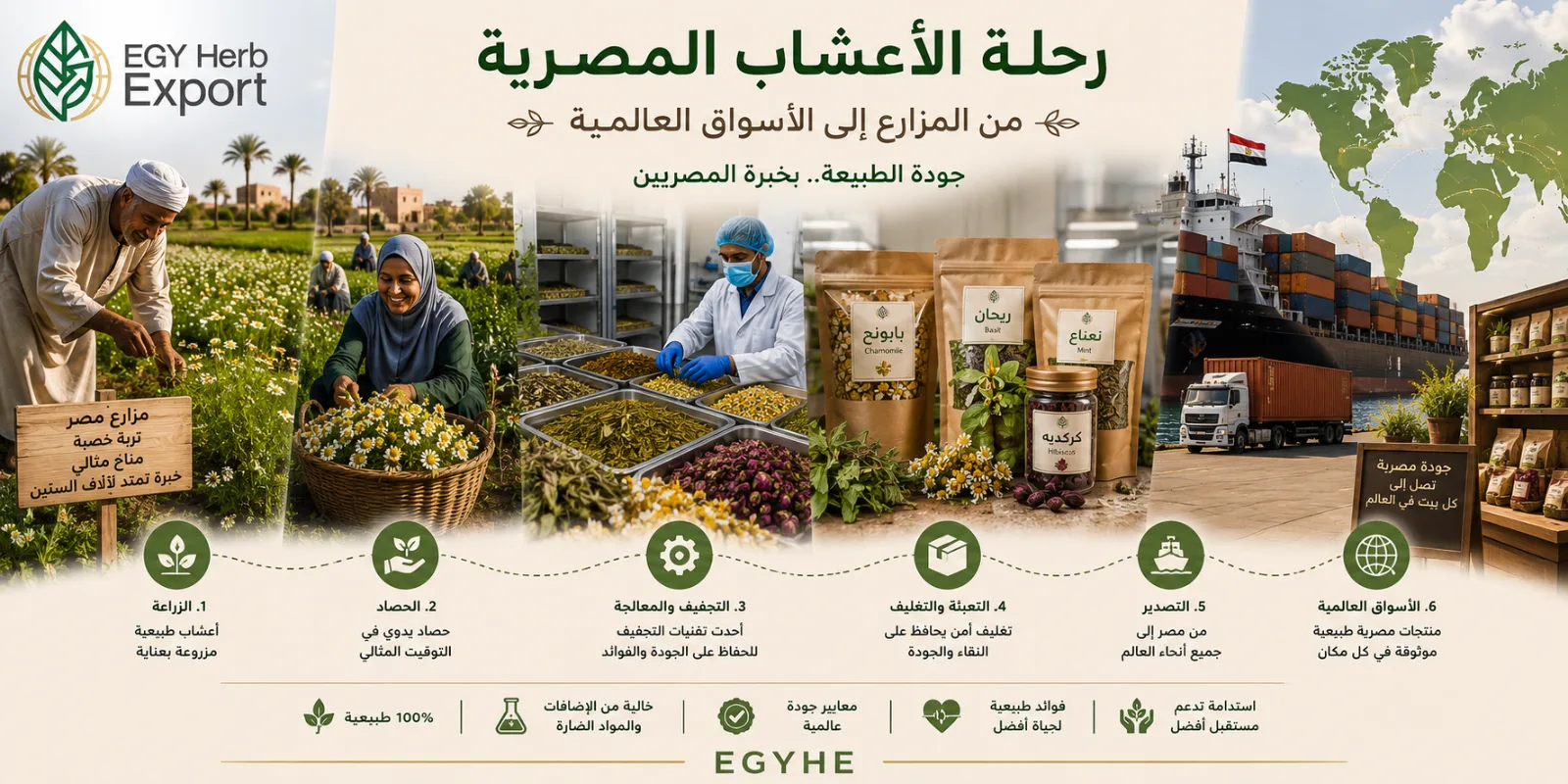
EGY Herb Export specializes in this category, sourcing chamomile, hibiscus, mint, basil, fennel, and anise directly from farms in Fayoum, Beni Suef, and Minya.

Why Egyptian Agricultural Exports Are Growing

Three factors are driving Egypt's export growth beyond just favorable climate:

Land reclamation at scale. The Egyptian government's Future of Egypt project is reclaiming 2.2 million feddans (924,000 hectares) of desert land for agricultural use. As this land comes into production, export volume will continue to increase.

Cold chain investment. Private companies have been investing heavily in post-harvest infrastructure. Packing facilities approved for EU export, refrigerated logistics, and freeze-drying capacity have all expanded significantly in the past three years, reducing post-harvest losses and extending the shelf life of exported products.

Market diversification. Egypt has signed preferential trade agreements with the EU, EFTA, and most recently with Mercosur β€” allowing tariff-free or reduced-tariff access for Egyptian produce to over 60 countries. For buyers, this means Egyptian suppliers are increasingly integrated into established global trade routes.

Source: AGBI Agricultural Exports Report, Mordor Intelligence Egypt Agriculture Market Report 2026

For Buyers: What This Means Practically

Egypt's scale as an agricultural exporter means that supply consistency is not a concern for most crops. The challenge for international buyers is finding the right supplier within a large and varied market β€” one with proper export documentation, quality certification, and the ability to fulfill repeat orders to specification.

For herbs specifically, EGY Herb Export works directly with farms in the primary growing regions and provides COA documentation, EU-standard pesticide testing, and FOB Cairo shipping with a minimum order of 500kg.

Request a quote or download our product catalog to see current availability and pricing.